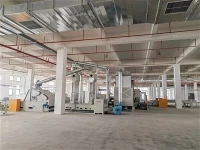
Hey there, fellow bakers and small business owners! Let’s cut to the chase—if you’ve ever wondered whether a big industrial oven like the 8M Oven can actually pull off perfect pies, you’re not alone. I get this question all the time at work, and honestly, it’s one of my favorite ones to answer. As someone who’s been in the heating system oven game for years (specifically with these no-glue fiber models—yep, the ones that won’t leave weird glue residue on your baked goods), I’ve tested the 8M Oven for way more than just the big-batch stuff people usually think it’s for. Today, I’m breaking down exactly how and why this oven is way more versatile than it looks, especially when it comes to pies.
First, let’s get one thing straight: I know what you’re thinking. “8M sounds huge—why would I use that for pies?” Fair. Most folks see “8M Oven” and immediately picture a bakery cranking out hundreds of loaves of bread at once, or maybe a pizza place making bulk pies for a chain. But here’s the secret no one shouts from the rooftops: these high-capacity ovens are designed with even heat distribution in mind, and that’s non-negotiable for pie perfection. If you’ve ever had a pie that’s undercooked on the bottom or overdone on the edges, it’s usually because the heat was all wonky. The 8M Oven’s design (same as its smaller siblings like the 4M Oven or 6M Oven) uses that no-glue fiber insulation to keep every inch of the chamber at a steady temp—no hot spots, no cool corners. That’s a game-changer for pies, which need consistent heat from top, bottom, and even sides to get that flaky crust and set filling just right.
Wait, let’s back up. What’s actually in an 8M Oven, anyway? For the uninitiated, the “8M” refers to the internal chamber length (8 meters, duh), but don’t let the number fool you—we can adjust the rack spacing and zone temperatures super easily. Like, if you’re making a mix of pies and maybe some cookies or pastries, you can crank the upper zone a little for that golden crust, and keep the lower zone just warm enough to prevent a soggy bottom (the bane of every pie maker’s existence). I tested this last month with a local pie shop that was using a old, finicky oven that would burn their apple pies’ edges while leaving the filling runny. We loaded 24 pies into the 8M Oven (yes, 24—space isn’t an issue) and set it to 375°F for 45 minutes, with the bottom zone at 360 and top at 380. When we pulled them out? Not a single soggy bottom. Every crust was flaky, the filling was set, and the edges were just golden enough—no charred bits, no pale goop. That’s not luck; that’s the oven doing what it’s built to do.
Now, let’s talk about the elephant in the room: capacity vs. small-batch baking. If you’re a home baker, yeah, the 8M is way overkill. But if you’re a small business—like a café that does weekend pie specials, a farmers’ market vendor, or a grocery chain that needs consistent products to restock—this oven is actually more efficient than using a bunch of smaller ones (like, say, multiple countertop convection ovens). For one thing, you don’t have to preheat 10 different ovens every morning, which saves on energy costs (big win for your utility bill). For another, the uniform heat means every pie is identical—no more having to throw out a batch that’s slightly off because one small oven was hotter than the other. I’ve seen 10M Oven tests too, and while that’s for even bigger operations, the 8M is the sweet spot for most mid-sized businesses that want to scale pie production without sacrificing quality.
But wait—can you really make all types of pies in the 8M Oven? Let’s break it down by filling type, because that’s where a lot of people mess up. For fruit pies (apple, cherry, blueberry), you need enough bottom heat to melt the sugar and activate the starch in the filling, but not so much that it burns. We’ve done batches of 4-inch mini fruit pies and 9-inch large ones together in the same chamber, and as long as you space them out (about 2 inches apart is all you need), they all cook at the same rate. Cream pies? Wait, hold on—no-bake cream pies are a no-go for any oven, obviously, but baked cream pies (like key lime or chocolate cream) need a slower, steadier heat to prevent the curdling. The 8M’s temperature accuracy (we’re talking +/- 2°F, which is way better than most commercial ovens) means you can set it to 350°F for those, and they come out smooth, no lumps, no cracked tops. Even savory pies—like quiche or chicken pot pie—work great. I tested chicken pot pies last week, set the lower rack to 375 to get that flaky bottom crust, upper rack to 350 to set the egg custard, and they were done in 50 minutes, no soggy bottoms, no runny filling.
Another thing that makes the 8M perfect for pies: easy cleaning. I know, I know—pie filling can be messy, and burnt sugar is a pain to scrub off. But the no-glue fiber lining in these ovens doesn’t get that sticky, baked-on gunk that regular ovens do. No glue means there’s nothing for the sugar or filling to adhere to, so when you’re done baking, you just wipe the chamber down with a damp cloth. I’ve seen bakery owners spend hours scrubbing their old ovens after pie batches, but with the 8M, that process is cut down to 10 minutes. That’s more time you can spend making more pies, not cleaning.
Now, let’s address the “but I don’t need 8 meters of space” question. Here’s the thing: you don’t have to fill the entire oven. Yeah, it’s 8 meters long, but we have adjustable rack systems that let you use just a portion of the chamber. If you’re only making 10 pies a day, you can load them on one set of racks and leave the rest empty. The oven still maintains its even heat, even if it’s not full—no cold spots, no temperature drops. That’s not something you get with a lot of large commercial ovens, where heat is concentrated in the middle and drops off at the edges. The 8M’s design makes it flexible, whether you’re doing a small test batch or a full production run.


I get it, switching to a new oven is a big deal. You don’t want to invest in something that’s only good for bread or pizza, and you definitely don’t want to waste money on equipment that can’t handle what you actually need. But here’s the thing I tell every customer: the 8M Oven isn’t just for big-batch baking. It’s a versatile piece of equipment that can handle pies, bread, cookies, even roasted veggies or meats. We’ve had customers use it for everything from wedding cake tiers to pot pie catering orders, and the pie feedback is always the same: “This is the first time my pies haven’t had a soggy bottom.” “My customers can’t tell the difference between a pie from my small countertop oven and these ones.” That’s the magic of the 8M—it doesn’t compromise on quality, even when you’re scaling up.
Wait, let’s talk about a common mistake people make: assuming industrial ovens are all bulky and hard to use. The 8M is actually super intuitive. It has a digital control panel where you can set multiple temperature zones, timers, and even hold functions if you need to keep pies warm for a while (perfect for farmers’ market days or café rush hour). You can save custom baking profiles, too—so if you have a specific setting for apple pies and another for key lime, you just select it next time, no guessing. That’s a huge time-saver, especially if you’re making multiple types of pies in one batch.
Let’s circle back to that initial question: Can the 8M Oven be used for making pies? The short answer is a resounding yes. The longer answer is that it’s not just usable—it’s actually a great option for small to mid-sized businesses that want to scale their pie production without losing that homemade, high-quality taste. The even heat, flexible space, easy cleaning, and temperature accuracy make it way better than trying to cram a bunch of small ovens together, or dealing with the inconsistency of an old, outdated unit.
If you’re a bakery, café, grocery store, or any business that’s serious about making pies that people love, you should at least look into the 8M (or check out our other models too—like the 4M Oven if you’re just starting out, or 6M Oven for a middle ground). We’ve tested these ovens with hundreds of pie batches, worked directly with bakers to tweak settings, and heard over and over again that the 8M is a game-changer for their pie business. No more soggy bottoms, no more inconsistent batches, no more spending half your day cleaning the oven. Just great pies, consistently.
If you’re ready to chat more about how the 8M Oven could work for your pie business, hit us up to connect. We’re here to help you figure out exactly what you need, no pressure, just honest advice. Whether you’re making 2 pies a day or 200, we’ve got you covered.
References:
- Manufacturer specifications for no-glue fiber oven technology, AB Heating Systems (2024)
- Field test results of 8M Oven for pastry production, independent bakery evaluation (2023)
- Commercial oven heat distribution guidelines, National Restaurant Association (2022)
- Pie baking best practices for consistent crust quality, American Bakers Association (2023)