

Fiber Opening Machine
What is Fiber Opening Machine
A Fiber Filling Machine is an automatic device that feeds fiber material into stuffable articles. The system fluffs the fibers to provide a uniform billow. The Fiber Filling Machine is used to create pillows, stuffed animals, and other products that use fiber. There are two types of Fibers: natural and synthetic. The first type of Fiber Filling Machine is a self-feeding system. The other type is an automatic filling machine that is fed from a hopper.
Advantages of Fiber Opening Machine
Versatility
Adequate system for opening all kinds of fibres. The material obtained is useful for any production process.
High degree of aperture
This is a system adaptable to any type of fibre and ensuring a high degree of opening, due to the regulation of the various machine parameters.
Simplicity in handling
Handling simplicity. The system is easy to handle. The controls are arranged to facilitate use.
Integral safety system
The system is of maximum safety protection devices installed on the machine. The material deposited in the entry table manually or by an automatic feeder (opening rounds), where the conveyor belt moves at an adjustable speed (from terminal control) to the power supply unit.
-
 cotton bale opener machine1.Overall Dimension:1800*900*900mm. 2.Could yield around 200KG loose silicon fiber every hour. 3.Could reach the loosening rate of 99% for 6D-15D silicon fiber. 4.Power:4KW 0.25kw.Add to Inquiry
-
 polyester fiber opening machine1.could yield around 400-500KG loose silicon fiber every hour . 2.could reach the loose rate of 99% for 0.78-0.9-1.25-2.5-3D silicon fiber .Add to Inquiry
-
 fiber bale opener1.could yield around 400-500KG loose silicon fiber every hour. 2.could reach the loose rate of 99% for 0.78-0.9-1.25-2.5-3D silicon fiber. 3.could reach the loose rate of 100% for 6-7-15D siliconAdd to Inquiry
-
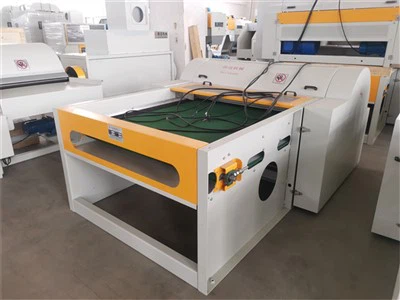 roving opener machine1.could yield around 400-500KG loose silicon fiber every hour. 2.could reach the loose rate of 99% for 0.78-0.9-1.25-2.5-3D silicon fiber. 3.could reach the loose rate of 100% for 6-7-15D siliconAdd to Inquiry
-
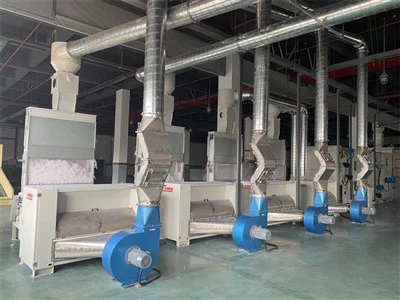 roving waste opener machine1.Overall Dimension:1550*1450*1100mm . 2.could yield around 300-500KG loose silicon fiber every hour .Add to Inquiry
-


Why Choose US
Our Factory
Kunshan Haijin Machinery Co., Ltd. is located in the Private Developing Zone of Luyang Town, Kunshan, China. With a production workshop of 60,000m2, we are a professional manufacturer specializing in making all kinds of toy machinery, sofa machinery, home textile machinery, and oth- er related products.
Production Equipment
We have six types machinery series: Opening fiber machine series, automatic filling fiber machine (Stuffing Machine) series, cutter (raw material gantry set-outing machine) series, needle detector series ball fiber machine series and other toy, home textile and sofa machinery.
Our certificate
The company currently has 30 utility patents, 22 appearance design patents. Through the SO9001:2000,CE, IAF, UKAS another four major certification.
Our Service
The company set production, sales, after-sales and other 8 efficient team, to provide customers with more professional and quality service.

How Does a Fiber Opening Machine Work
Most fiber opening machines work on the principle of using cylinders or drums covered with fine metal points or teeth. These points gently tease out fibers as they pass through the rotating drums or rollers. In carding machines for example, the card clothing on cylinders and flats help to disentangle fibers. As fibers move through multiple sets of rollers with points set at different angles, they get further combed, aligned and blended together.
The metal points also remove any neps or clusters in fibers, then the now parallel fibers exit as a thin web which can be further processed. Some machines may also include brushes that brush fibers to remove any dust or foreign particles and straighten them. The main steps involved are opening, blending, cleaning and parallelizing fibers to produce a uniform sliver.
Different Components of Fiber Filling Machine
A Fiber Filling machine has several components. A hopper has a rotating air impeller that pulls fiber materials. A nozzle on the opposite end of the duct will stuff the fiber material into the casing of a pillow or cushion. A metering mechanism is used to control the feeding of the fiber material. Its hopper can be manually controlled or automatic. It can also be automated. All of these components are crucial for the Fiber Filling Machine to function properly.
The Fiber Filling Machine is a complete fiber filling system that can handle a variety of fiber materials. The main components of this system include a hopper, a combing drum, and an operation desk. The latter is used for stuffing hollow articles. A cyclical flow of air and fiber generates a fibrous billow. This type of filling machine is available with various options. A simple type of machine is one that can be customized.


What Are the Functions of a Fiber Opening Machine
Fiber opening machines serve the following important functions:
Separation: They separate fibers that are tangled and matted together. This prevents fiber balls and neps while spinning.
Blending: Different fibers can be blended together uniformly by fiber opening machines to produce novel mixes.
Cleansing: Foreign particles, dust and short fibers are removed by the metal points and brushes in machines.
Parallelization
The fibers are combed and arranged so that they run parallel to each other in the same direction throughout the web.
Thinning
Thick fiber locks are teased apart and thinned out to produce a thin, consistent fiber web or sliver.
Mixing
Different fibers fed together are thoroughly mixed and distributed evenly throughout the web by fiber opening machines.
Breaking
Hard fiber bundles and knots are softened and broken to loosen tight fibers before spinning.
Applications of Fiber Opening
Depending on the type of machine used, fiber opening finds applications in processing natural and man-made fibers like:
Cotton processing: In cotton, the seed fibers extracted from bolls using ginning machines contain many non-fibers.
Wool processing: Wool fibers emerge from sheep as thick locks that need to be separated before spinning.
Jute processing: Jute fiber obtained from plant bast needs drum carding to disentangle harsh, tangled fibers before spinning low quality yarns.
Synthetic fiber processing: Draw frames, draw winders and cleaners are used extensively to process nylon, polyester and acrylic fibers produced as long strands.
Blending: Carding allows innovative blending of natural and synthetic fibers together based on their properties.
Yarn production: The consistent fiber sliver output after opening is directly fed onto ring, rotor or rapier spinning machines to manufacture yarns.
Weaving & knitting: Uniform yarns obtained from proper fiber processing are suitable for weaving intricate fabric designs and knitting different styles of fabrics.
Technical and industrial textiles: Key applications include geotextiles, medical textiles, filtration fabrics where consistency in raw fibers is important.
Here are the basic steps to operate a fiber opening machine safely:
Ensure the machine is clean, dry and has no broken parts before use. Lubricate moving components adequately.
Load fibers carefully into the feed chute or hopper taking care not to cause any jams and distribute them evenly.
Adjust machine settings like roller speeds, distances and card settings based on fiber type as per manufacturer's guidelines.
Switch on the machine and release fibers onto the revolving roller slowly under supervision. Note that you never try to stop rollers manually.
Observe fiber flow through openings regularly for any unevenness and adjust settings to get an even thin web out.
Collect sliver gently avoiding damage. Following the collection, store in enclosed space away from moisture until further processing.
Shut down the machine completely after emptying fibers before leaving. Also, switch off the power supply as well.
Carry out periodic machine cleaning and lubrication, parts inspection and replacement to ensure longevity of use.


What Factors Affect the Choice of Fiber Opening Machine
There are several factors to consider when selecting a suitable fiber opening machine:
Fiber type
Natural or synthetic affects machine designs like card settings for maximum separation effectiveness.
Fiber quantity
Batch or continuous processing machines based on daily production volumes and sizes.
End use of sliver
Direct spinning or additional combing/drawing processes influence machine selections.
Capital and floor space availability
Costs and infrastructure guide investments in small or large scale machines.
Maintenance needs
Ease of upkeep and availability of local service support for imported machinery.
Operating skills
Automation levels match available technical skills of machine operators.
Energy efficiency
Running costs over life cycle between conventional and new advanced machinery.
Process compatibility
Matching fiber opening output properties to downstream equipment standards.
Key Application of Fiber Opening Machine
The fiber opening machine plays a pivotal role in various industries where fibers are a fundamental raw material. Its applications are diverse and crucial for ensuring the quality and efficiency of downstream processes. Here are some key applications of the fiber opening machine:
Textile industry
In textile manufacturing, the fiber opening machine is used to prepare raw fibers for spinning. It loosens and separates compacted fibers, ensuring uniformity and consistency in the yarn. This process is essential for producing high-quality textiles, including apparel, home furnishings, and industrial textiles.
Nonwoven fabric production
Nonwoven fabrics are widely used in applications such as hygiene products, medical textiles, and automotive interiors. The fiber opening machine is utilized to open and blend various types of fibers to create nonwoven webs. By controlling the fiber blending process, manufacturers can achieve desired characteristics such as strength, absorbency, and softness in the final product.
Mattress and bedding industry
Fiber opener machines are integral to the production of mattress and bedding materials. They are used to process natural and synthetic fibers, including cotton, polyester, and wool, to create the filling materials for mattresses, pillows, comforters, and other bedding products. The machine ensures that the fibers are evenly distributed and fluffed for optimal comfort and support.
Automotive industry
Fiber opening machines are employed in the manufacturing of automotive textiles and interior components. These machines process fibers to create materials used in car seats, headliners, carpets, and insulation. By opening and blending fibers effectively, manufacturers can produce automotive textiles that meet stringent performance and durability requirements.
Insulation production
In the construction industry, fiber opener machines are utilized in the production of thermal and acoustic insulation materials. These machines process natural and synthetic fibers, such as fiberglass, mineral wool, and recycled textiles, to create insulation batts or loose-fill insulation products. Properly opened and blended fibers ensure optimal insulation performance and energy efficiency in buildings.
Recycling industry
Fiber opening machines play a crucial role in the recycling of textile waste and post-consumer materials. These machines are used to shred and open textile waste into fibers that can be repurposed into new products, such as recycled yarns, nonwoven fabrics, and insulation materials. By efficiently processing textile waste, fiber opening machines contribute to sustainability efforts and resource conservation.
The fiber opening machine is a versatile and indispensable tool in industries that rely on fibers as a primary raw material. Its applications span across textile manufacturing, nonwoven production, bedding, automotive, construction, and recycling sectors, facilitating the production of a wide range of products with consistent quality and performance.
Opened polyester fibers
The primary output of the machine is polyester fibers that have been effectively loosened, separated, and fluffed. These fibers are ready for further processing, such as carding, blending, spinning, or forming into nonwoven webs.
Uniform fiber length
The machine ensures that the polyester fibers have a consistent length, contributing to the uniformity and quality of the end product. This uniform fiber length is essential for achieving consistent performance and appearance in downstream processes.
Controlled fiber weight
Polyester fiber opener machines often allow for adjustments in fiber weight per unit area. Manufacturers can control the weight of the opened fibers according to their specific requirements, whether for lightweight or dense applications.
Cleaned and decontaminated fibers
Polyester fiber opening machines can incorporate cleaning and decontamination mechanisms to remove impurities, dust, or contaminants from the fibers. This results in cleaner, higher-quality fibers suitable for use in various applications.
Blended fibers
Depending on the machine machine set up, polyester fibers can be blended with other materials during the opening process. This enables manufacturers to create custom blends with specific performance characteristics tailored to their application needs.
Increased bulk and fluffiness
The opening process imparts a degree of bulkiness and fluffiness to the polyester fibers, enhancing their loft and softness. This can be advantageous in applications such as filling materials for pillows, comforters, and upholstery, where loft and comfort are desired attributes.
Reduced fiber entanglement
Polyester fiber opener machines effectively reduce fiber entanglement and clumping, ensuring that the fibers remain free-flowing and easy to handle. This facilitates downstream processes and helps maintain production efficiency.
Modernization trends are significantly influencing fiber opening technology as well. Some notable impacts of advanced machinery include:
Automation reduces human intervention and improves consistency through digital controls of drum settings, speeds etc.
Higher throughput capacity machines with on-line blending match faster spinning and weaving efficiencies.
Integrated machines combine opening, blending and drafting in one setup saving space and time.
Remote monitoring and diagnostics and automated alarms minimize downtimes.
Data collection helps analyze irregularities swiftly for continuous improvements.
Newer materials like composite grid bars enhance machine life cycles cutting costs.
Eco-friendly designs save energy through energy-efficient motors and optimized consumption.


Cleaning of opening machine
First of all, open the protective cover outside the fiber opening machine, pull open the control box, clean all the fuselage. Need to pay attention to clean the fiber and cotton in the electromagnetic clutch. Because this is the key part of the fire caused by accident. In addition, also need to clean the oil around the tread box, clean the fiber cotton inside the control box.
Then loosen the warp threads to remove the harnesses and cotton wool under the chest beam. If there is too much cotton wool under the chest beam. The air pipe of the auxiliary nozzle will be damaged.
Finally, the shell of the whole opening machine can be simply cleaned.
Cleaning of the clearing machine
Under normal circumstances, the clearing machine connects with the opening of the use. Then the daily cleaning of the clearing machine and the opening of the synchronous can be.
Special attention should be paid to the timely cleaning of the machine at the corners of the accumulated cotton. So as to avoid long-term failure to clean up the machine operation problems.
FAQ
As one of the most professional fiber opening machine manufacturers and suppliers in China, we're featured by quality products and good service. Please rest assured to buy customized fiber opening machine at low price from our factory.
