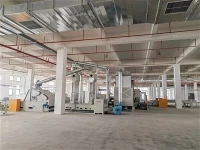
If you’re running a non-glue production line, you know how critical every component is to keeping your process smooth, efficient, and consistent—especially actuators. These small workhorses are the ones moving everything from fiber feeds to fabric cutting, and picking the wrong type can throw off your entire output. As a non-glue production line supplier with years of working with natural fiber lines, polyester staple fiber production lines, and all kinds of non-woven fabric production lines, I’ve seen first-hand how different actuators solve different pain points. Let’s break down the main types we rely on, why they matter, and how they fit into a typical non-glue line, so you can make smarter choices for your setup.
First, let’s get on the same page: a non-glue production line makes bonded non-woven fabrics without adhesive, right? It uses heat, pressure, or mechanical entanglement to hold fibers together. That means parts like fiber opening machines, carding sections, thermal calenders, and cutting units all need precise, reliable movement—no sloppiness here. Actuators turn control signals into physical motion, and they’re the reason your line doesn’t have hiccups like uneven fiber placement or misaligned fabric cutting.
Linear Electric Actuators: The Workhorse for Most Core Processes
If you’ve ever adjusted the tension on a fiber web or moved a calender roller to match fabric thickness, there’s a good chance you used a linear electric actuator. These are our go-to for most non-glue lines because they’re precise, low-maintenance, and easy to integrate with the PLCs that run modern production equipment. Unlike hydraulic actuators, they don’t leak fluid (a huge plus in a clean manufacturing space, which non-woven production needs to avoid fabric contamination) and they’re quieter, too.
For example, on a natural fiber line, the carding machine’s doffer roller needs consistent linear movement to pull fibers evenly from the main cylinder. A linear electric actuator adjusts the gap between the doffer and cylinder in real time, so you don’t get lumpy spots in the resulting web. We also use them on the feeding section to meter out fiber at a steady rate—too little, and your fabric is weak; too much, and you waste material.
Another big use case: the dot line sealer for non woven fabric. That’s the part of the line that applies intermittent pressure and heat to bond fibers without full-surface contact, which is key for non-glue processes. The sealer’s rollers need to move linearly to create those dot patterns accurately, and linear electric actuators let you adjust the dot spacing on the fly—something hydraulic systems can’t do as quickly. I’ve seen lines where cheap, low-quality linear actuators caused misaligned dots, leading to 15% more scrap; upgrading to high-torque electric units cut that scrap way down.
Pneumatic Actuators: Fast, Affordable for High-Speed Auxiliary Tasks
Pneumatic actuators use compressed air to create motion, and they’re perfect for tasks that need quick, repetitive movement without super high precision. They’re way cheaper than electric actuators for these specific jobs, which makes them ideal for auxiliary parts of a non-glue production line.
What do we use them for? Things like opening and closing gates in the fiber feeding system, actuating cutters for off-cuts, or adjusting guide rollers to keep the fabric web centered as it moves through the line. On a synthetic fiber line, for example, when the fabric reaches the end of the calender, a pneumatic actuator triggers a shear cutter to snip it into sections at high speed—faster than most electric actuators can keep up with.
The catch here is that pneumatic systems require a steady air compressor, and they’re less precise than electric ones. You can’t use them for adjusting calender roller gaps (that needs tight tolerance), but for quick, simple moves, they’re hard to beat. We always recommend combining pneumatic and electric actuators on your line—use electric for precision tasks, pneumatic for speed.
Rotary Actuators: For Turning and Swiveling Motion
Rotary actuators are all about rotational movement, and they’re often overlooked in non-glue lines, but they’re super important for parts like winding machines and roll stands. After the non-woven fabric is finished, it needs to be wound onto large rolls for packaging, right? The winding core has to rotate at a consistent speed to keep the fabric tension even, and that’s where rotary actuators come in.
We use electric rotary actuators here because they can maintain exact rotational speed, which prevents the fabric from stretching or becoming too loose (both cause quality issues). On some non woven fabric production lines, we also use small rotary actuators to swivel guide brackets, so operators can adjust the path of the fabric without stopping the line. Pneumatic rotary actuators work here too, but again, precision is key for winding—electric is the better pick for that.
Another spot? Some non-glue lines use thermal bonding with rotary heat rollers, and a small rotary actuator can adjust the angle of the roller to ensure uniform pressure across the entire width of the fabric. If that angle is off, one side of the fabric is weaker than the other, and you end up with waste.
Hydraulic Actuators: Heavy-Duty for Large, High-Pressure Components
Wait, hydraulic actuators—are they still relevant for non-glue lines? Yeah, but only for specific heavy-duty jobs. If your line has large calender rollers (which exert tons of pressure to bond fibers thermally) or heavy unwinding stands for bulk fiber bales, hydraulic actuators can handle that massive force better than electric ones, at least at a lower upfront cost.


That said, we don’t use them for most non-glue line tasks because they’re high-maintenance—you have to check fluid levels, fix leaks, and they’re not as energy efficient. I saw a polyester staple fiber production line that switched from hydraulic calender actuators to electric ones a few years back, and their maintenance costs dropped by 30% while their precision got way better. The only time we still suggest hydraulics is for lines that process extra-heavy fabrics (like mattress ticking, for reference—check our synthetic fiber line page for that type of application) where the force needed is truly extreme.
Why Choosing the Right Actuator Type Matters for Your Bottom Line
Let’s be real: every part of your production line impacts your profit. The wrong actuator can lead to more scrap, longer downtime, higher maintenance costs, or inconsistent product quality. For example, a friend who runs a small non-glue line was using pneumatic actuators to adjust his calender gaps—every time the fiber type changed, he had to manually tweak the pressure, which took 20 minutes and often led to uneven bonding, resulting in 10-12% scrap. He switched to linear electric actuators, and now those adjustments take 2 minutes, his scrap is down to 3%, and his line runs 15% more hours a month.
Another thing to consider: integration with your existing equipment. If you’re updating an old non-glue line, you might not want to rewire the whole thing for electric actuators—pneumatic can be a simpler, cheaper upgrade for auxiliary parts. If you’re building a new line from scratch, electric actuators are the way to go because they work seamlessly with modern automation systems, making it easier to monitor and adjust your process in real time.
Pro Tips for Actuator Selection
Based on our experience as a non-glue production line supplier, here are a few quick tips to keep in mind:
- Match actuator type to the task: Electric for precision (calenders, dot sealers, winding), pneumatic for quick repetitive moves (gates, cutters), rotary for spinning, hydraulic for only heavy high-force jobs.
- Check environmental factors: Non-woven production can have dusty air or high temperatures (from thermal bonding)—make sure your actuators are rated for that. We always go with IP65-rated electric actuators for lines that process natural fibers, which can be dusty.
- Prioritize maintenance: Electric actuators have fewer moving parts, so they need less upkeep than pneumatic or hydraulic ones. Factor that into your long-term costs, not just the upfront price.
- Test if you can: If you’re unsure which actuator works for your specific fiber type (natural vs synthetic), reach out to us—we’ve tested dozens of setups on natural fiber lines, polyester staple fiber production lines, and more, so we can point you to what works.
At the end of the day, your non-glue production line is only as good as its weakest component, and actuators are a big one. Don’t sleep on them—take the time to pick the right types for each part of your line, and you’ll see better quality, less downtime, and lower costs. If you’re looking to build a new non-glue line or upgrade your current one and want to talk through actuator options, feel free to reach out for a procurement consultation. I’d be happy to walk through how different actuator setups work for your specific fiber and fabric needs.
References
- Non-Woven Fabric Actuator Technology: Industrial Automation Journal, 2022.
- Maintenance Best Practices for Non-Woven Production Equipment: Manufacturing Today, 2023.
- Actuator Selection for Thermal Bonding Processes: International Journal of Non-Woven Fabrics, 2021.