

If you’ve ever stood on the production floor of a pillow manufacturing facility watching a half-trained operator fumble their way through feeding fiber into a down pillow filling machine, adjusting fill density mid-run, or troubleshooting a jammed nozzle, you know how costly even small mistakes can be. As a Pillow Filling Machine supplier who’s spent 12 years walking alongside small-batch ateliers and large-scale bedding manufacturers alike, I’ve seen firsthand that a high-quality machine is only as good as the person operating it. I’ve watched businesses throw six-figure machinery budgets at top-of-the-line equipment like automatic pillow manufacturing machine or industrial pillow stuffing machine, only to see output drop 30% in the first quarter because teams skipped structured, hands-on training.
Effective training isn’t just about showing someone which button to press—it’s about building a worker’s confidence, knowledge of the machine’s mechanics, and ability to adapt to different production needs. In this post, I’ll break down the training framework we’ve refined over the years, one that cuts downtime, reduces material waste, and extends the lifespan of your pillow making machine.
Start with the 3 Core Pillars of Machine Literacy
Before an operator ever turns on a pillow stuffing machine, they need to master three foundational areas that apply to every model, from compact single-station units to high-speed continuous lines. Many companies skip this step and jump straight into live production, which leads to avoidable errors.
First, build mechanical literacy. This doesn’t mean training someone to overhaul the machine’s motor (that’s what our service team is for), but understanding the purpose and location of every key component. For example, when training on a cushion stuffing machine, a worker should know how to identify the fiber hopper, the auger (the part that pushes fiber into the pillow case), the fill scale sensor, and the emergency stop button. They should also learn basic safety protocols specific to the equipment—like never reaching into the hopper mid-cycle, or how to lock out the machine during maintenance. We’ve seen too many operators try to clear a jam on their single pillow filling machine while it’s still running, leading to bent nozzles or even personal injury. Mechanical literacy also includes knowing your machine’s limits: our high-speed down pillow filling machine, for example, can process 600 pillows per hour at peak efficiency, but cramming it with extra raw fiber to speed up output will burn out the motor in months.
Second, master material-specific knowledge. Pillow filling machines work with a range of materials—down, synthetic fiber, cotton, memory foam, even shredded latex—and each behaves differently. Down, for example, is lightweight and fluffy, so it needs a different auger speed than denser polyester fiber. A worker who only trains on synthetic filling will struggle to adjust settings when switching to luxury down for a custom order. During training, we walk operators through how each material impacts fill density, weight, and overall pillow quality. We also teach them to spot spoiled materials: down clumps that have absorbed moisture, synthetic fiber that’s too matted to feed smoothly, or cotton that has inconsistent staple length. This knowledge cuts down on the number of defective pillows produced, which also reduces waste—one of the biggest hidden costs in pillow manufacturing.
Third, learn data interpretation. Modern pillow making machines come with digital displays that track fill weight, run time, and error codes. A great operator doesn’t just follow a preset program; they use that data to adjust on the fly. For example, if the fill scale on an automatic pillow manufacturing machine consistently reads 10 grams under the target, a worker should know how to tweak the auger speed or sensor calibration, not wait for a supervisor to fix it. We spend 1-2 sessions on data literacy, teaching new operators to read error logs, spot patterns (like a sensor that’s drifting out of calibration every 200 pillows), and adjust settings without stopping production unnecessarily. This small skill alone can boost output by 15% in the first three months a machine is in use.
Hands-On Training: Simulate, Practice, Refine
The biggest mistake we see manufacturers make is training new operators on live production runs. Putting a novice in front of a high-speed pillow stuffing machine during a holiday order rush is a recipe for costly delays. Instead, we structure hands-on training in three phases: simulation, supervised practice, and independent run time.
Simulation is non-negotiable for us. Before a trainee touches any raw materials, they spend 4-6 hours on a simulation module we developed for every model of machine. This module replicates the digital interface, lets operators practice adjusting settings, troubleshooting small jams, and even handles virtual “error codes” to build muscle memory. For example, a trainee can practice clearing a simulated jam on a cushion stuffing machine without wasting a single bag of fiber. We’ve found that this phase reduces on-the-job mistakes by 40%, because trainees feel familiar with the interface before they ever work with actual materials.
Next, supervised practice. Once a trainee has mastered the simulation, they move to hands-on work with a senior operator. The goal here is to practice every task at a slow, deliberate pace, focusing on technique. This includes loading the hopper correctly, inserting pillow cases onto the nozzle, monitoring fill weight, and finishing and sealing the pillow. We enforce a “no rush” rule during this phase—trainees can take as long as they need to do each task correctly, even if that means the line runs at half speed. Over our years as a Pillow Filling Machine supplier, we’ve seen that rushing this phase leads to bad habits that are hard to break later. For example, a trainee who learns to force a pillow case onto a nozzle too quickly is likely to tear cases and damage nozzles over time. During supervised practice, we also teach operators to keep a detailed log of each run, noting any issues (like inconsistent fiber feed) that come up. This log becomes a reference for both the trainee and the senior operator to spot trends.
Finally, independent run time. Once a trainee can complete a full run without mistakes, they move to independent work, starting with small orders before moving to large production runs. We check in daily during this phase, offering feedback and addressing any questions that come up. It’s important to note that training isn’t a one-time event—even experienced operators need refreshers when switching to a new model of machine, or when working with a new type of material. For example, an operator who’s run a standard pillow making machine for years might need a half-day training session to adapt to a down pillow filling machine that has more sensitive fill sensors for lightweight fiber.

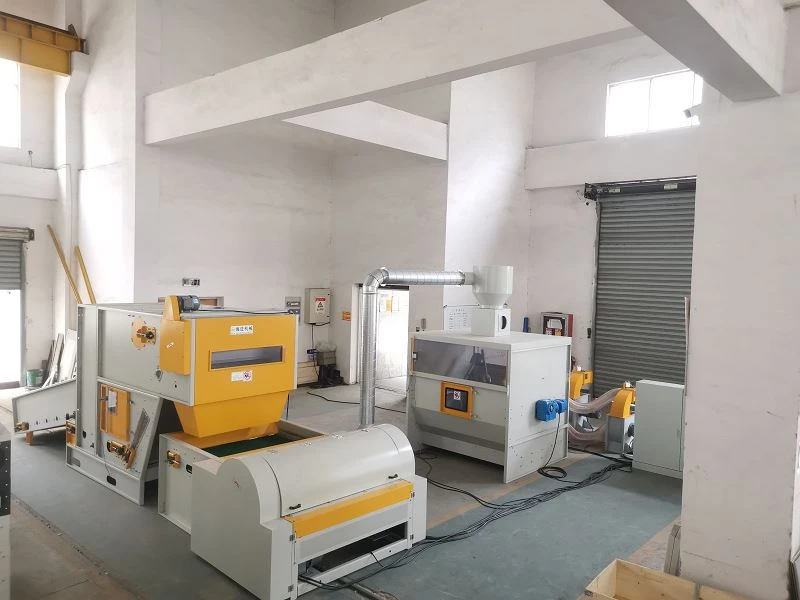
Ongoing Training: Keep Your Team Sharp Long-Term
Effective training doesn’t end on day 30, when a new operator is cleared for independent work. The manufacturing industry is always evolving—new materials, updated machine software, and changing quality standards mean your team needs regular refreshers to keep operating at peak efficiency.
First, schedule monthly skill-building sessions. These can be 30-minute sessions focused on a specific topic: troubleshooting a common error code, adjusting fill density for a new type of raw fiber, or learning a new feature on your automatic pillow manufacturing machine. We host these sessions for all our customers, either in-person or virtually, and we’ve found that even veteran operators pick up new tricks that reduce waste or speed up production. For example, one of our customers in Texas shared that a monthly session on auger calibration helped their team cut down on fiber waste by 12% in six months.
Second, create a cross-training program. We always advise manufacturers to have at least two operators trained on every machine in the facility. This prevents downtime if one operator calls out sick or needs time off. Cross-training also gives operators a chance to learn from each other— a senior operator might pick up a new troubleshooting trick from a newer team member, who’s more comfortable with the machine’s digital software. Over the years, we’ve seen that cross-trained teams are more flexible, more engaged, and more productive overall.
Third, track performance to identify training gaps. Use data from your machine’s digital logs to spot patterns that might indicate a training need. For example, if two out of three operators are struggling with jam clearances on your pillow stuffing machine, that means your training program isn’t clearly covering that step. If fill density is consistently off across multiple runs, that’s a sign that operators need more practice adjusting settings for different materials. At our company, we work closely with customers to analyze this data and adjust our training recommendations to fit their specific needs.
The Real Payoff: A Well-Trained Team Drives Business Growth
When operators are well-trained on their down pillow filling machine, the benefits go far beyond fewer mistakes. One of our clients in Ontario, a mid-sized bedding manufacturer, invested in a structured training program for their 12 operators three years ago. In the first year, they saw a 25% reduction in downtime, a 18% drop in material waste, and a 10% increase in overall output. They were able to take on more orders, expand their customer base, and even add a night shift because their team was reliable and consistent. Another client, a small atelier in New York, used their training to switch from custom-order only to small-batch production, because their operators could run their automatic pillow manufacturing machine efficiently for 8 hours straight without constant supervision.
At the end of the day, investing in training is investing in your bottom line. A high-quality pillow making machine is a big purchase, but it’s only as good as the person using it. Whether you’re setting up a new production line, upgrading your equipment to a newer model, or just looking to boost the performance of your existing cushion stuffing machine, structured, hands-on training is the key to getting the most out of your investment.
If you’re ready to level up your team’s skills, or you’re looking to upgrade to a more efficient machine that will pair perfectly with a solid training program, we’re here to help. Our team can connect you with customized training resources, expert guidance on machine operation, and support tailored to your production needs. Reach out to learn more about how we can partner with you to build a more productive, skilled workforce.
References
- Occupational Safety and Health Administration (OSHA). (2022). Machine Guarding and Lockout/Tagout for Production Equipment. U.S. Department of Labor.
- Textile Institute. (2021). Best Practices for Textile Manufacturing Equipment Training and Efficiency. Textile Progress, Vol. 53, No. 4, pp. 212-237.
- International Fabricare Institute. (2020). Material-Specific Training for Pillow and Bedding Manufacturing. Technical Report 20-07.


